
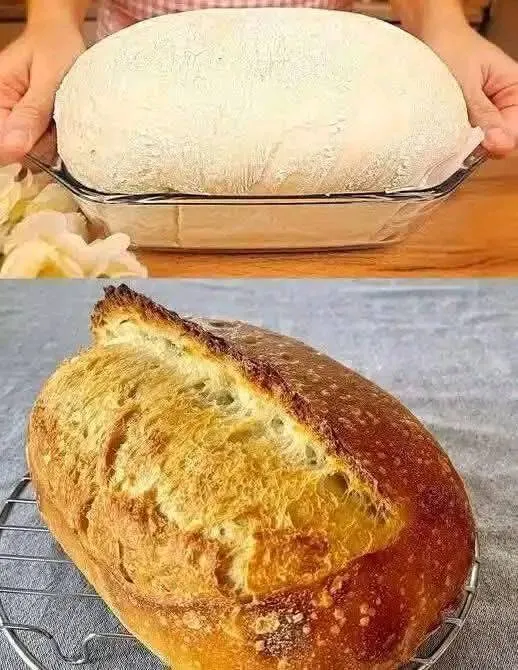

Classic Homemade Bread — Simple, Soft, and Delicious
Why you’ll love this recipe
Soft, tender crumb with a light crust.
Bread Baking Kit
Uses simple pantry ingredients.
Two loaves from one batch — great for sandwiches, soup, or meal prep.
Beginner friendly — step-by-step with helpful troubleshooting.
Yield & Times
Yield: 2 medium loaves (about 10–12 slices per loaf)
Prep time: 20 minutes active (plus short rests)
First rise (bulk fermentation): ~60–90 minutes (until doubled — depends on room temperature)
Cookbook
Final proof: ~20–30 minutes
Bake time: 25–30 minutes at 200°C (392°F)
Total time: ~2–3 hours (including rises)
Ingredients (as provided)
Dry yeast: 10 g (1 packet)
Warm water: 200 ml (for dissolving yeast)
Flour: 120 g (1 cup) + 720 g (6 cups) → Total flour = 840 g
Salt: 10 g (1 teaspoon)
Kitchen Pantry Starter
Warm water (add): 400 ml → Total water = 600 ml
Egg yolk: 1 (for brushing)
Milk: 1 tablespoon (mix with egg yolk for wash)
Baker’s notes (percentages):
Hydration ≈ 71% (600 g water ÷ 840 g flour) — this yields a soft, slightly tacky dough.
Yeast ≈ 1.19% of flour (10 g ÷ 840 g).
Salt ≈ 1.19% of flour (10 g ÷ 840 g).
Equipment
Large mixing bowl
Loaf Pan Set
Measuring cups/spoons or scale (recommended)
Wooden spoon or dough scraper
Baking tray (or 2 loaf tins if preferred)
Oven
Pastry brush
Step-by-Step Instructions
1. Proof the yeast (15 minutes)
In a medium bowl, pour 200 ml warm water (warm to the touch, about 38–43°C / 100–110°F).
Fermentation Tools
Sprinkle 10 g dry yeast into the water and stir until dissolved.
Add 120 g flour and mix into a smooth batter. Cover and let rest 15 minutes.
This pre-mix (a short autolyse-like step) wakes the yeast and makes the dough easier to handle.
2. Build the dough
After 15 minutes, add 400 ml warm water to the yeast mix and stir until combined.
Specialty Flour Blends
Gradually add the remaining 720 g flour and 10 g salt. Mix until the dough comes together into a shaggy mass.
3. Knead to a soft, slightly tacky dough (3–8 minutes)
Turn dough onto a lightly floured surface and knead 3–4 minutes by hand (or 4–6 minutes with a stand mixer on low). Goal: a soft, slightly non-sticky dough.
If dough is very sticky, dust lightly with flour a tablespoon at a time — avoid adding too much.
Alternative: use stretch-and-fold every 10–15 minutes for 2–3 sets (great for higher hydration).
Egg Wash Brush
4. Bulk fermentation (first rise)
Shape into a ball, place in a lightly oiled bowl, cover with cling film or a damp towel. Let the dough rise until doubled in size — typically 60–90 minutes at room temperature (warmer room → faster rise).
Check by gently pressing a finger into the dough — if the indentation springs back slowly, it’s ready.
5. Divide, shape, and bench rest
Gently deflate the dough to remove large gas pockets. Divide into two equal pieces.
Measuring Spoons Set
Roll each piece into a ball and rest for 10 minutes, covered (bench rest) to relax the gluten.
6. Shape the loaves
Lightly flour your work surface. Flatten each piece with your fingers, then roll the edges inward toward the center and tuck to create a smooth top. For sandwich loaves, shape into logs and place seam-side down on a baking tray or into loaf tins.
7. Final proof
Arrange shaped dough on a baking tray, cover, and leave to proof about 20 minutes (or until puffy). You want visibly risen but not over-proofed dough.
Dough Mixer
8. Egg wash & bake
Preheat oven to 200°C (392°F).
Mix 1 egg yolk + 1 tablespoon milk, brush gently over the tops.
Bake at 200°C for 25–30 minutes until golden brown and the loaves sound hollow when tapped on the bottom (or until internal temp ~95°C / 203°F).
Remove from oven and cool on a rack for at least 10 minutes before slicing.
Serving Suggestions
Serve warm with butter, jam, or olive oil.
Baking Supplies
Use as sandwich bread or for grilled cheese.
Excellent with soups, stews, and salads.
Variations
Herbed loaf: add 1–2 tbsp chopped fresh rosemary, thyme, or mixed dried herbs.
Seeded top: brush with egg wash and sprinkle sesame, poppy, or sunflower seeds before baking.
Whole wheat swap: replace up to 25% of flour with whole wheat (expect denser crumb; add a touch more water).
Loaf Pan Set
Egg-wash alternative: brush with milk or milk + a tablespoon of honey for a softer shine.
Troubleshooting & Tips
Dough too sticky: add flour 1 tbsp at a time during kneading, but don’t overdo it — dough should remain slightly tacky.
Dense loaf: under-proofing or too much flour; ensure bulk rise until doubled.
Too quick rise/overproofed: cooler fermentation or reduce yeast slightly.
Pastry Baking Course
Crust too dark: place foil loosely over loaves for the last 5–10 minutes.
Chewy crumb: allow full rest and avoid over-kneading.
Storage
Room temp: Keep in a bread bag or wrapped in a tea towel for up to 3 days.
Freezer: Slice and freeze in resealable bags for up to 3 months. Rewarm slices in toaster or oven.
Nutrition (approx. per serving)
(User-provided; approximate)
Yeast Starter Kit
Calories: 150 | Total Fat: 1.5 g | Saturated Fat: 0.5 g | Cholesterol: 20 mg
Sodium: 300 mg | Total Carbs: 30 g | Dietary Fiber: 1 g | Sugars: 1 g | Protein: 4 g